On this page
- What is the fundamental metallurgical difference between brass and bronze?
- How do the mechanical properties of brass compare to bronze?
- How does the corrosion resistance of brass compare to bronze?
- Which brass and bronze grades are most commonly used in engineering?
- How does fabricating brass differ from fabricating bronze?
- How do I select the right brass or bronze alloy for my application?
- Key Takeaways
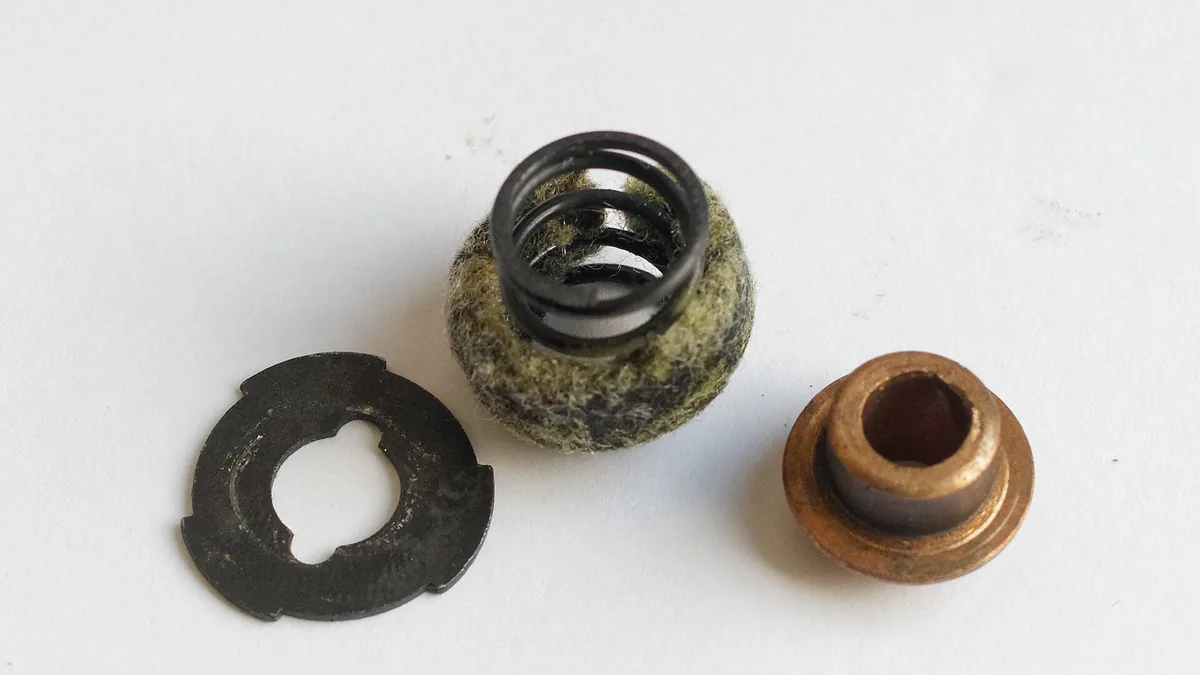

Brass and bronze are two families of copper alloys that engineers often confuse. Brass, a copper-zinc alloy, provides high machinability, moderate strength, and a bright golden appearance, making it a staple for valves, plumbing fittings, and decorative hardware. Bronze, primarily copper-tin, delivers higher strength, high wear resistance, and strong corrosion performance in seawater and industrial environments, which suits it for bearings, bushings, marine propellers, and pump components. The choice between them hinges on mechanical loads, exposure conditions, and fabrication requirements.
What is the fundamental metallurgical difference between brass and bronze?#
Brass is a copper-zinc alloy with zinc content typically ranging from 5% to 45%, whereas bronze is primarily a copper-tin alloy containing 2% to 12% tin, though many modern bronzes substitute aluminum, silicon, or nickel as the principal addition. Alpha brasses are single-phase face-centered cubic solid solutions that are ductile and easily cold-worked, beta brasses have a body-centered cubic structure that is harder, and bronzes form hard intermetallic phases that increase strength and wear resistance.
The fundamental distinction between brass and bronze lies in the primary alloying element. Brass is an alloy of copper and zinc, with zinc content typically ranging from 5% to 45%. Bronze, in its classic form, is an alloy of copper and tin, although many modern bronzes incorporate aluminum, silicon, or nickel as the principal addition instead of tin. Understanding the resulting microstructures explains why these alloys behave so differently.
In the copper-zinc system, the equilibrium phases dictate mechanical behavior. Alloys with up to approximately 35% zinc remain within the alpha phase field at room temperature. Alpha brasses, such as cartridge brass (C26000, 70Cu-30Zn), are single-phase solid solutions with a face-centered cubic structure. They are ductile, easily cold-worked, and exhibit excellent deep-drawing characteristics. When zinc exceeds roughly 35%, a second phase, beta, appears. Beta brass has a body-centered cubic structure, is harder and stronger at room temperature, but becomes highly workable when heated. Alloys like Muntz metal (C28000, 60Cu-40Zn) contain both alpha and beta phases and are typically hot-worked. Small additions of other elements modify properties: tin in naval brass (C46400) improves corrosion resistance, while lead in free-cutting brass (C36000) dramatically enhances machinability by promoting chip breaking.
Classical bronze relies on tin as the primary solute. The copper-tin phase diagram is more complex, but most wrought and cast bronzes contain between 2% and 12% tin. These alloys can form hard, intermetallic phases that increase strength and wear resistance. Phosphor bronze (C51000) contains a trace of phosphorus, which acts as a deoxidizer and further raises strength and fatigue resistance. Aluminum bronze (C95400) substitutes aluminum for tin, producing a high-strength alloy with a protective aluminum-oxide film. Silicon bronze (C65500) uses silicon to achieve good strength and excellent weldability. A common point of confusion is that many alloys carrying the “bronze” trade name are technically brasses. Manganese bronze, for instance, is a high-strength brass with added manganese and iron, not a true bronze. Always verify the UNS number to confirm the chemical composition. For a refresher on solid-solution strengthening and phase terminology, see Key Metallurgy Terms Every Engineer Should Know.
How do the mechanical properties of brass compare to bronze?#
Bronze alloys generally offer higher tensile and yield strength, better fatigue resistance, and superior wear behavior under sliding contact compared to brass. Brass excels in ductility and formability; annealed cartridge brass can exceed 50% elongation, while bearing bronze and aluminum bronze provide high load-bearing capacity and PV limits for bushings, springs, and wear parts.
Mechanical performance separates brass and bronze in ways that directly influence part design. Brass generally offers a wider range of ductility and is easier to form, while bronze excels in strength, hardness, and resistance to surface damage under load.
Tensile and yield strengths vary significantly with alloy and temper. Annealed cartridge brass (C26000) has a tensile strength around 300 MPa and a yield strength near 75 MPa, with elongation exceeding 50%. This combination permits deep drawing into complex shapes. Free-cutting brass (C36000) sacrifices ductility for machinability: tensile strength reaches about 340 MPa, but elongation drops to roughly 5%. Naval brass (C46400) balances strength and corrosion resistance with a tensile strength near 380 MPa and elongation around 20%.
Bronze alloys are engineered for higher load-bearing capacity. Bearing bronze (C93200), a cast leaded tin bronze, offers a tensile strength of approximately 240 MPa and a yield strength of 110 MPa, but its true value lies in fatigue resistance and embeddability under boundary lubrication. Phosphor bronze (C51000) in spring temper can achieve tensile strengths above 690 MPa, making it suitable for electrical connectors and springs. Aluminum bronze (C95400) is among the strongest copper alloys, with tensile strengths around 620 MPa and yield strengths near 250 MPa, rivaling some steels while retaining corrosion resistance.
Wear resistance is where bronze clearly outperforms brass. The hard intermetallic phases in tin and aluminum bronzes create a surface that resists galling and adhesive wear. Brass, especially high-zinc grades, tends to gall under sliding contact unless well lubricated. For bearing applications, the PV limit (pressure-velocity product) of a bronze like C93200 is substantially higher than that of any brass, making bronze the default choice for bushings and thrust washers. When evaluating these numbers on a material data sheet, understanding the test methods is essential; see How to Read a Tensile Test Report and Material Data Sheet.
How does the corrosion resistance of brass compare to bronze?#
Bronze is inherently immune to dezincification, the selective leaching of zinc that weakens brass in water service, and offers better resistance to stress corrosion cracking from ammonia. Aluminum and silicon bronzes excel in seawater and chemical environments, while brass requires dezincification-resistant grades or protective measures for plumbing and marine use.
Corrosion behavior often dictates the final alloy selection. Both brass and bronze form a protective patina in atmospheric exposure, but their performance diverges sharply in water and chemical environments.


The most notorious weakness of brass is dezincification. In stagnant or slightly acidic waters, zinc selectively leaches out of the alloy, leaving a porous, weakened copper skeleton. This can cause sudden leaks in plumbing fittings and valve bodies. Dezincification-resistant (DZR) brasses, such as those containing small additions of arsenic or antimony, and naval brass with its tin content, mitigate this problem but do not eliminate it entirely. Bronze, containing little or no zinc, is inherently immune to dezincification. In seawater, aluminum bronze and silicon bronze are the materials of choice for pumps, propellers, and valve stems. They resist pitting and crevice corrosion even under high flow velocities, whereas brass often suffers rapid attack.
Stress corrosion cracking (SCC) is another concern. Brass is susceptible to SCC in the presence of ammonia or amines, a condition sometimes called season cracking. Residual stresses from cold forming can trigger cracking unless the part is stress-relieved. Bronze alloys are far less prone to ammonia SCC, which is why phosphor bronze is used for springs and fasteners in chemical processing equipment.
Galvanic compatibility must be considered when these alloys are joined to other metals. Brass and bronze are both cathodic to steel and aluminum, meaning they will accelerate corrosion of the less noble metal in a wet assembly. The potential difference is larger for brass with high zinc content, making bronze a slightly safer partner for steel in mixed-metal designs. Insulating gaskets, coatings, or careful material pairing are necessary to avoid galvanic attack. For detailed guidance, refer to How to Prevent Galvanic Corrosion in Mixed-Metal Assemblies.
Which brass and bronze grades are most commonly used in engineering?#
Common brass grades include cartridge brass (C26000) for deep-drawn parts, free-cutting brass (C36000) for screw machine components, and naval brass (C46400) for marine hardware. Typical bronze grades are bearing bronze (C93200) for bushings, phosphor bronze (C51000) for springs and connectors, aluminum bronze (C95400) for pump casings, and silicon bronze (C65500) for fasteners and welding rod.
The table below compares widely used brass and bronze grades, their nominal compositions, mechanical properties (typical annealed or as-cast values, except where noted), and the applications that exploit their strengths.
| Alloy Type | UNS Grade | Nominal Composition | Tensile Strength (MPa) | Yield Strength (MPa) | Elongation (%) | Typical Uses |
|---|---|---|---|---|---|---|
| Cartridge Brass | C26000 | 70Cu-30Zn | 300 | 75 | 50 | Ammunition cases, plumbing fittings, radiator cores |
| Free-Cutting Brass | C36000 | 61.5Cu-35.5Zn-3Pb | 340 | 130 | 5 | Screw machine parts, fasteners, valve components |
| Naval Brass | C46400 | 60Cu-39.25Zn-0.75Sn | 380 | 170 | 20 | Marine hardware, propeller shafts, condenser plates |
| Bearing Bronze | C93200 | 83Cu-7Sn-7Pb-3Zn | 240 | 110 | 12 | Bearings, bushings, pump impellers |
| Phosphor Bronze | C51000 | 94.8Cu-5Sn-0.2P | 690* | 550* | 8* | Springs, switch contacts, fasteners |
| Aluminum Bronze | C95400 | 85Cu-11Al-4Fe | 620 | 250 | 15 | Pump casings, valve bodies, marine propellers |
| Silicon Bronze | C65500 | 97Cu-3Si | 380 | 170 | 30 | Marine fasteners, architectural hardware, welding rod |
*Spring temper. Properties vary with product form and heat treatment. Always consult the material specification for design values.
How does fabricating brass differ from fabricating bronze?#
Brass, especially leaded grades like C36000 (rated 100% machinability), offers easy chip breaking and high-speed machining, and alpha brasses can be deep-drawn or stamped without intermediate annealing. Bronze typically machines at lower speeds, though silicon bronze welds well and is used as filler metal; high-zinc brasses are difficult to weld due to zinc vaporization.
How a part is made often narrows the alloy choice before service conditions even enter the discussion. Brass and bronze differ markedly in their response to common manufacturing processes.


Machinability is a traditional strength of brass. C36000 free-cutting brass is the benchmark against which other copper alloys are rated, assigned a machinability index of 100%. The lead particles in the microstructure act as chip breakers, allowing high-speed, dry machining with excellent surface finish. Bronze alloys generally machine at lower speeds. Leaded bearing bronzes like C93200 achieve about 70% machinability, but aluminum bronzes can be tough and abrasive, requiring rigid setups and sharp carbide tooling.
Welding and brazing present different challenges. High-zinc brasses are difficult to weld because zinc vaporizes at temperatures far below the melting point of the alloy, creating porosity and hazardous fumes. Low-zinc brasses and naval brass can be brazed or soldered successfully. Bronze, particularly silicon bronze, is one of the most weldable copper alloys. It is routinely used as a filler metal for TIG welding of dissimilar metals and for building up bearing surfaces. Aluminum bronze also welds well with matching filler, though preheating and post-weld cooling control are needed to avoid cracking.
Forming operations favor brass. Alpha brasses work-harden slowly and can be deep-drawn, spun, or stamped into complex shapes without intermediate annealing. Cartridge brass is the classic example, taking its name from the deep-drawing of ammunition casings. Bronzes, with their higher strength and lower ductility, are more limited in cold-forming. They are often used in cast form or machined from wrought stock, although silicon bronze sheet can be formed for architectural panels.
How do I select the right brass or bronze alloy for my application?#
Start by identifying the primary failure mode you are guarding against: wear, corrosion, or mechanical overload. For seawater service, aluminum bronze or silicon bronze is typical; for bearings and wear, bronze is required; for high-volume machined parts, free-cutting brass often works. Always verify the UNS number, weigh total life-cycle cost, and match the alloy to the most demanding condition.
Choosing between brass and bronze requires a systematic look at the operating environment, loading conditions, and manufacturing route. Start by identifying the primary failure mode you are guarding against: wear, corrosion, or mechanical overload. Then work through the following checklist:
- Environment: Will the part see freshwater, seawater, steam, or chemicals? For continuous seawater immersion, aluminum bronze or silicon bronze is almost always the answer. For potable water plumbing with moderate flow, DZR brass or naval brass may be sufficient and more economical.
- Load and Motion: Is the component static, or does it involve sliding or rotation? Bearings, bushings, and wear plates demand the fatigue and embeddability of bronze. Brass is acceptable for low-speed, lightly loaded guides but will fail prematurely under high PV conditions.
- Lubrication: In starved-lubrication or dry-running scenarios, leaded tin bronzes and self-lubricating bronze grades offer a safety margin that brass cannot match.
- Fabrication Method: High-volume screw machine parts point to C36000 brass. Weldments and weld-repaired components favor silicon bronze. Large castings for pump bodies are often aluminum bronze.
- Cost and Availability: Brass generally costs less per kilogram than bronze, but the total part cost depends on scrap rates and machining time. A higher-priced bronze that machines well and lasts longer may be cheaper over the product life cycle.
- Name vs. Reality: Do not rely on trade names. A “manganese bronze” part might actually be a high-strength brass, and its corrosion resistance will not match that of a true aluminum bronze. Always specify the UNS number on the drawing and verify the mill test report.
For example, a seawater pump impeller experiencing cavitation and moderate stress would be well served by cast aluminum bronze (C95400). A threaded bushing in a food-processing machine, requiring frequent disassembly and resistance to mild acids, might use phosphor bronze (C51000). A decorative interior door handle with no structural demands could be made from C26000 brass for its color and ease of polishing.
Key Takeaways#
- Brass (Cu-Zn) and bronze (Cu-Sn) are distinct alloy families with different strengths: brass excels in machinability and formability, bronze in wear resistance and corrosion performance.
- Dezincification is the critical failure mechanism for brass in water service; bronze is inherently immune.
- For bearings and wear surfaces, bronze alloys like C93200 and C95400 are standard; brass is generally unsuitable for dynamic load-bearing applications.
- Always confirm the actual chemical composition via UNS designation, as many trade names (e.g., manganese bronze) can mislead.
- Match the alloy to the most demanding condition: corrosion environment, mechanical load, or fabrication constraint, and validate with a material data sheet.